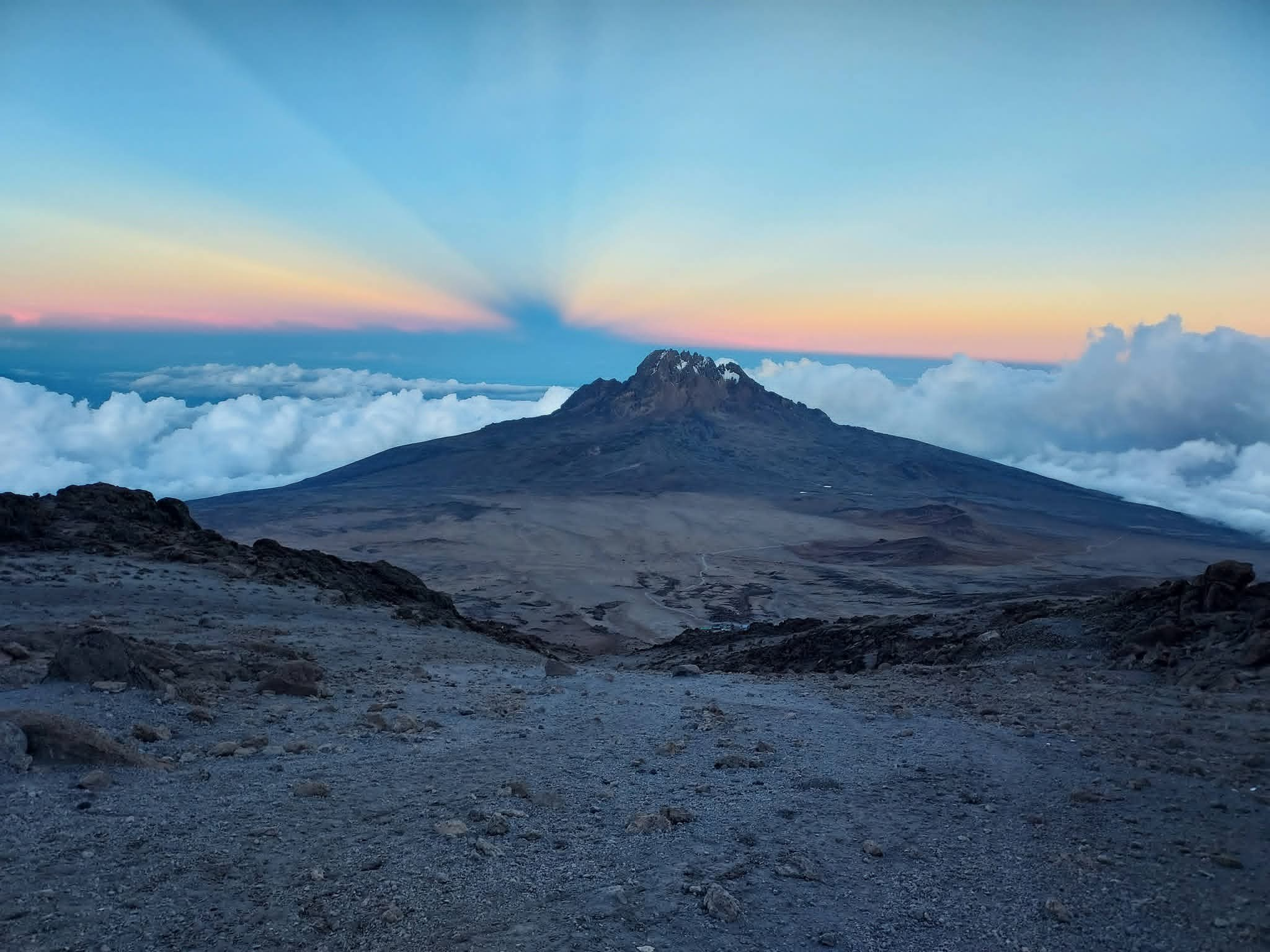
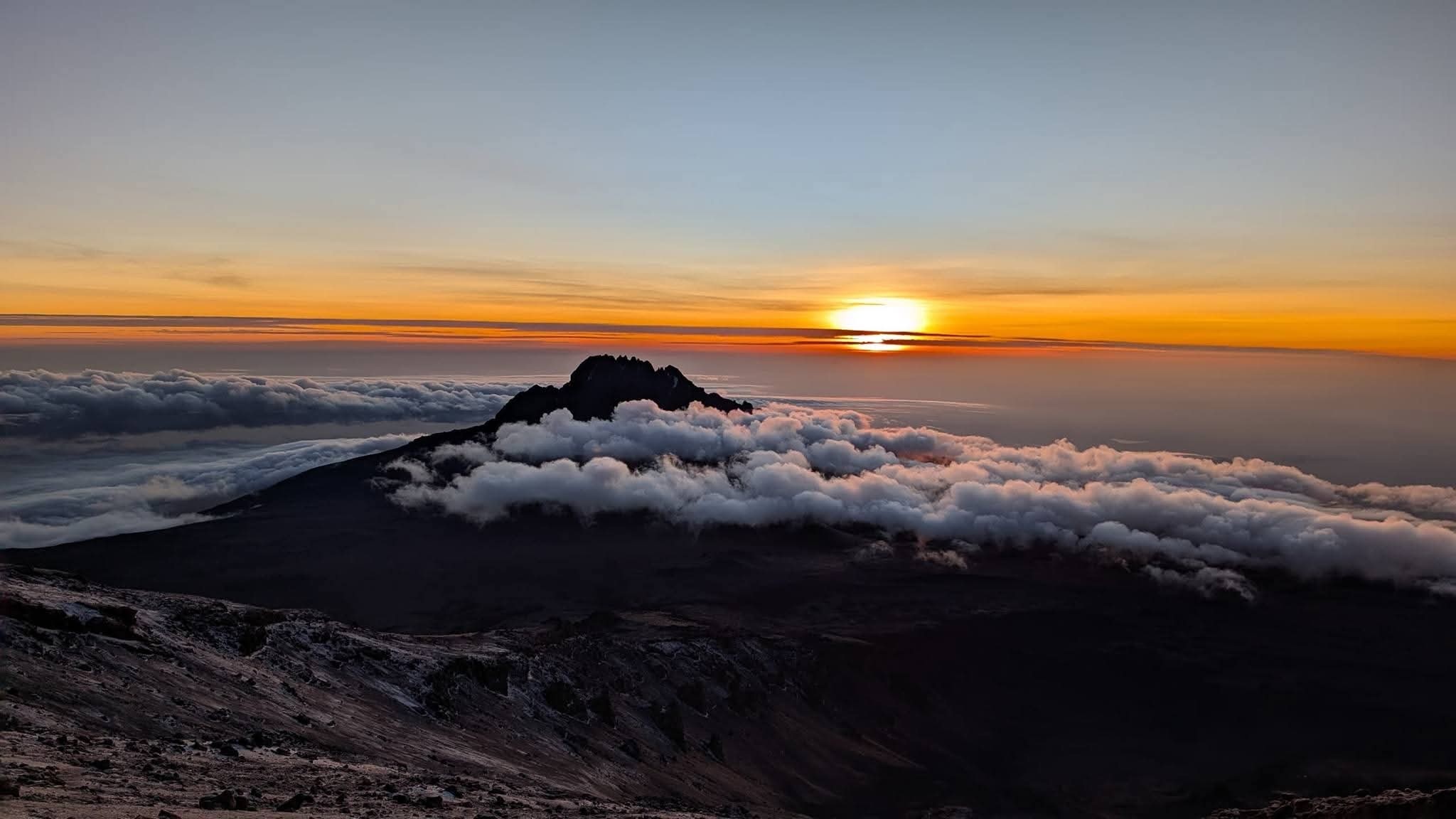
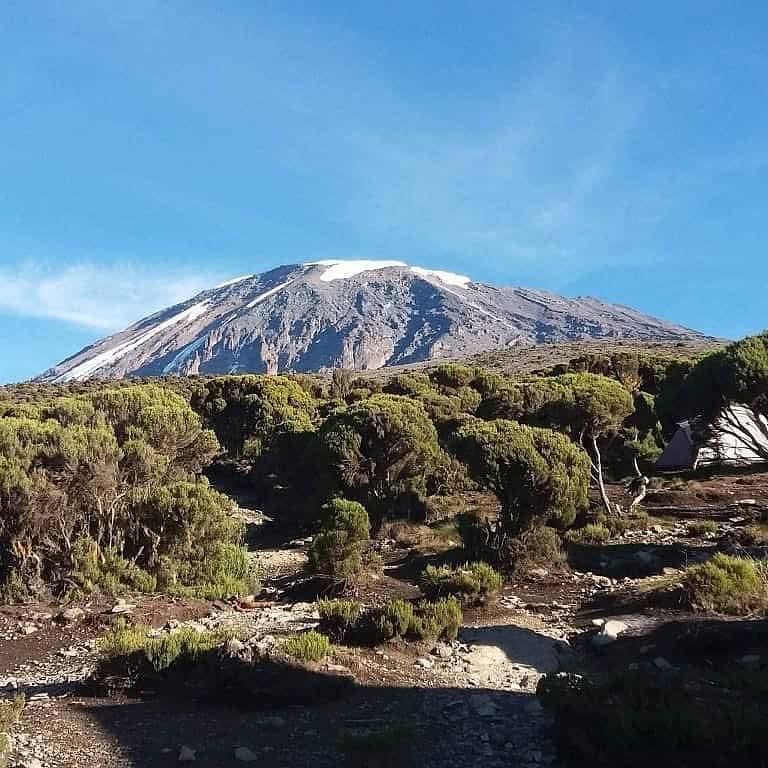
The 7 Day Rongai Route approaches Kilimanjaro from the north near the Kenya border. It is a good choice for travelers who want a quieter camping trail and a different view of Mawenzi and Kibo.
The seven day program separates the early northern stages before reaching Mawenzi Tarn. This creates a steadier schedule than the 6 day version and gives another day for the guides to monitor how you are adjusting.
Your package includes airport transfers, two Moshi hotel nights, park fees, camping equipment, meals, mountain crew and regular health checks.
Highlights
7 mountain days with a licensed local guide team
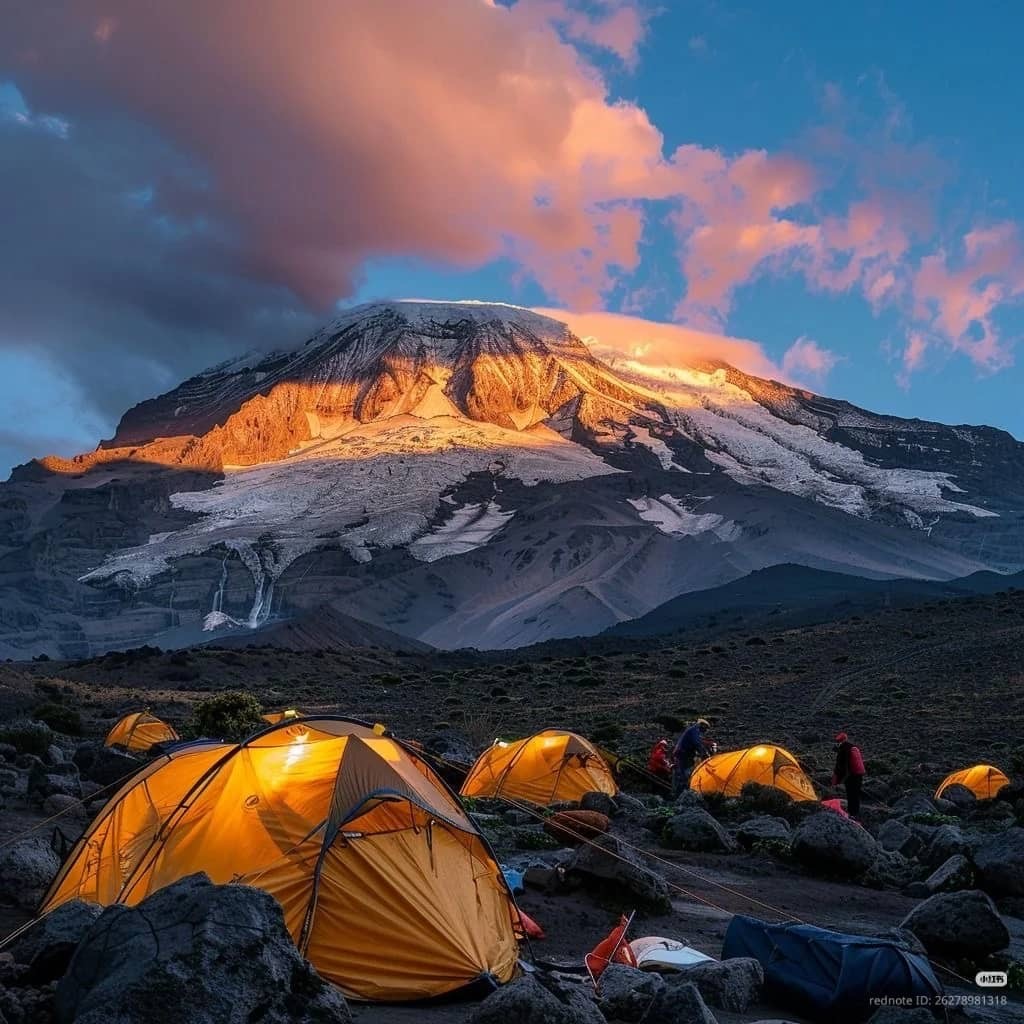
Full-service mountain camping with a cook and porters
Daily health checks and emergency oxygen support
Airport transfers and Moshi hotel nights included
1 / 6
Itinerary
Day 1Moshi to Rongai Gate, then Simba Camp
Drive to Rongai Gate for registration and trek through farmland and forest to Simba Camp at about 2,625 metres.
Habitat
Montane rainforest
Journey
3 to 4 hours walking
Pace
Mountain trekking
Meals
Breakfast · Lunch · Dinner
What to expect
Drive to Rongai Gate for registration and trek through farmland and forest to Simba Camp at about 2,625 metres. Walking time is about 3 to 4 hours.
Day focus: Simba Camp
Day 1 | Accommodation
Mountain stay
Simba Camp
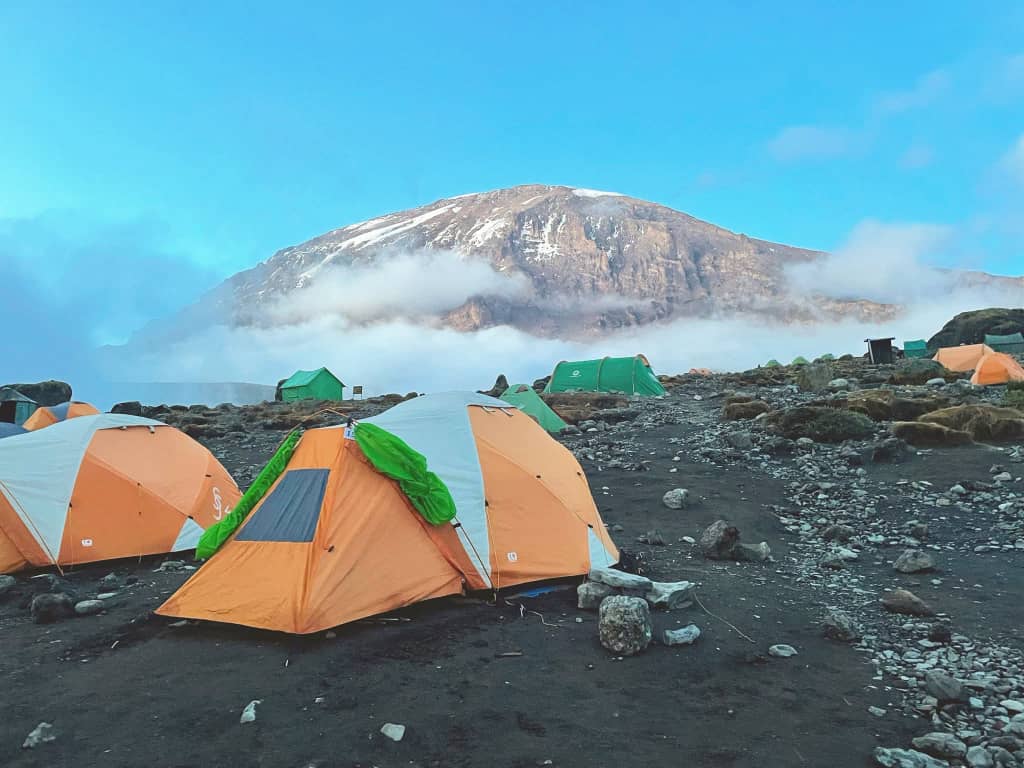
Mountain camping with tents prepared by the crew. The exact camp follows the published route and park conditions.
Simba
Day 2Simba Camp to Second Cave Camp
Continue through moorland to Second Cave at about 3,450 metres with views of Kibo and the northern plains.
Habitat
Heath and moorland
Journey
3 to 4 hours walking
Pace
Mountain trekking
Meals
Breakfast · Lunch · Dinner
What to expect
Continue through moorland to Second Cave at about 3,450 metres with views of Kibo and the northern plains. Walking time is about 3 to 4 hours.
Day focus: Second Cave Camp
Day 2 | Accommodation
Mountain stay
Second Cave Camp
Mountain camping with tents prepared by the crew. The exact camp follows the published route and park conditions.
Second Cave
Day 3Second Cave Camp to Kikelewa Camp
Cross open moorland towards Kikelewa Camp at about 3,600 metres, with Mawenzi rising ahead.
Habitat
Heath and moorland
Journey
3 to 5 hours walking
Pace
Mountain trekking
Meals
Breakfast · Lunch · Dinner
What to expect
Cross open moorland towards Kikelewa Camp at about 3,600 metres, with Mawenzi rising ahead. Walking time is about 3 to 5 hours.
Day focus: Kikelewa Camp
Day 3 | Accommodation
Mountain stay
Kikelewa Camp
Mountain camping with tents prepared by the crew. The exact camp follows the published route and park conditions.
Kikelewa
Day 4Kikelewa Camp to Mawenzi Tarn
Climb towards Mawenzi Tarn at about 4,315 metres and spend the afternoon resting near the jagged Mawenzi peak.
Habitat
Alpine desert
Journey
4 to 5 hours walking
Pace
Mountain trekking
Meals
Breakfast · Lunch · Dinner
What to expect
Climb towards Mawenzi Tarn at about 4,315 metres and spend the afternoon resting near the jagged Mawenzi peak. Walking time is about 4 to 5 hours.
Day focus: Mawenzi Tarn
Day 4 | Accommodation
Mountain stay
Mawenzi Tarn
Mountain camping with tents prepared by the crew. The exact camp follows the published route and park conditions.
Mawenzi Tarn
Day 5Mawenzi Tarn to Kibo Hut
Cross the saddle between Mawenzi and Kibo to reach Kibo Hut at about 4,700 metres.
Habitat
Arctic summit zone
Journey
5 to 6 hours walking
Pace
Mountain trekking
Meals
Breakfast · Lunch · Dinner
What to expect
Cross the saddle between Mawenzi and Kibo to reach Kibo Hut at about 4,700 metres. Eat early and prepare for summit night. Walking time is about 5 to 6 hours.
Day focus: Kibo Hut
Day 5 | Accommodation
Mountain stay
Kibo Hut
Shared mountain hut accommodation on the Marangu Route. Final arrangements are confirmed with your climb booking.
Kibo
Day 6Kibo Hut to Uhuru Peak, then Horombo Hut
Begin around midnight for Gilman’s Point and Uhuru Peak at 5,895 metres, then descend through Kibo to Horombo Hut.
Habitat
Heath and moorland
Pace
Very challenging summit day
Meals
Breakfast · Lunch · Dinner
What to expect
Begin around midnight for Gilman’s Point and Uhuru Peak at 5,895 metres, then descend through Kibo to Horombo Hut. The full day takes about 11 to 14 hours.
Day focus: Horombo Hut
Day 6 | Accommodation
Mountain stay
Horombo Hut
Shared mountain hut accommodation on the Marangu Route. Final arrangements are confirmed with your climb booking.
Horombo
Day 7Horombo Hut to Marangu Gate and Moshi
Habitat
Montane rainforest
Pace
Mountain trekking
Meals
Breakfast · Lunch
What to expect
Descend through moorland and rainforest to Marangu Gate, complete park checkout and return to Moshi.
Day focus: Moshi
Day 7 | Drop-off
Transfer to the airport or continue with a safari, Zanzibar stay or local experience.
What's included
What's included in the price
Included
Private airport transfers on arrival and departure
Two hotel nights in Moshi, one before and one after the climb
Kilimanjaro National Park entry, accommodation and rescue fees
Professional mountain guides, cook and porters
Meals during the climb and safe drinking water
Mountain accommodation and equipment stated in the itinerary
Daily health checks with a pulse oximeter
Emergency oxygen and a first aid kit
Kilimanjaro certificate where applicable
Government taxes
On request
Private climb dates
Sleeping bag and trekking equipment rental
Portable private toilet on camping routes
Safari or Zanzibar extension
Not included
International flights and Tanzania visa
Travel insurance with high altitude trekking cover
Sleeping bag rental and personal trekking equipment
Tips for the mountain crew
Extra hotel nights or room upgrades
Portable private toilet unless requested on camping routes
Safari, Zanzibar or day trips unless added to your booking
Price
Your Kilimanjaro climb price
Starting price per person. Final price depends on group size and confirmed travel arrangements.
1 Choose your departure
Join a scheduled climb or request a private departure for your group.
Join a group
Sociable
Climb on a scheduled departure with other prepared trekkers and the full mountain crew.
Private
Your own pace
Choose your dates and climb with a dedicated guide team arranged around your group.
2 What the package covers
The route price includes the mountain services and safety support shown below.
Mountain team
01
Licensed guides, cook and porters throughout the climb.
Park & camp
02
Park, rescue and accommodation fees plus mountain meals.
Safety support
03
Daily health checks, emergency oxygen and first aid equipment.
Every climb includes the published mountain services, meals, accommodation, park fees and safety support.
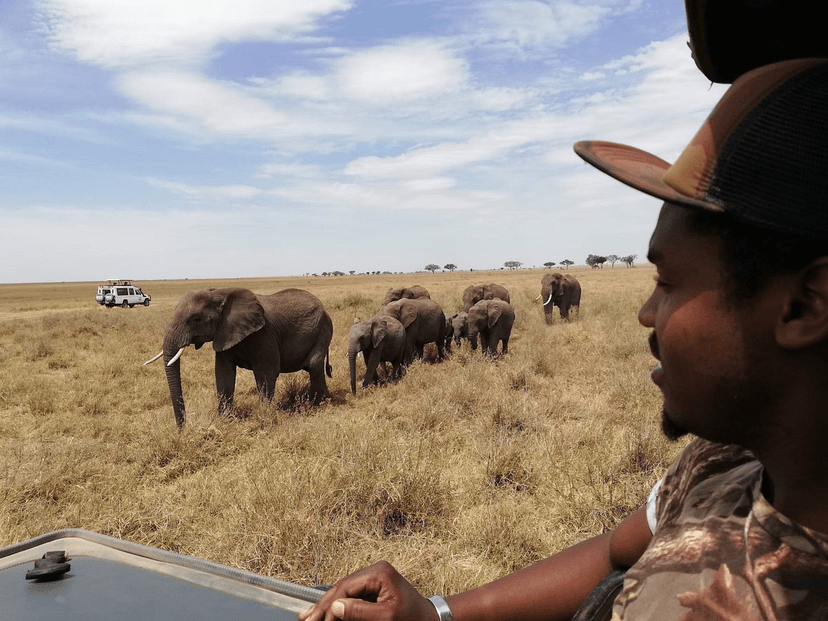
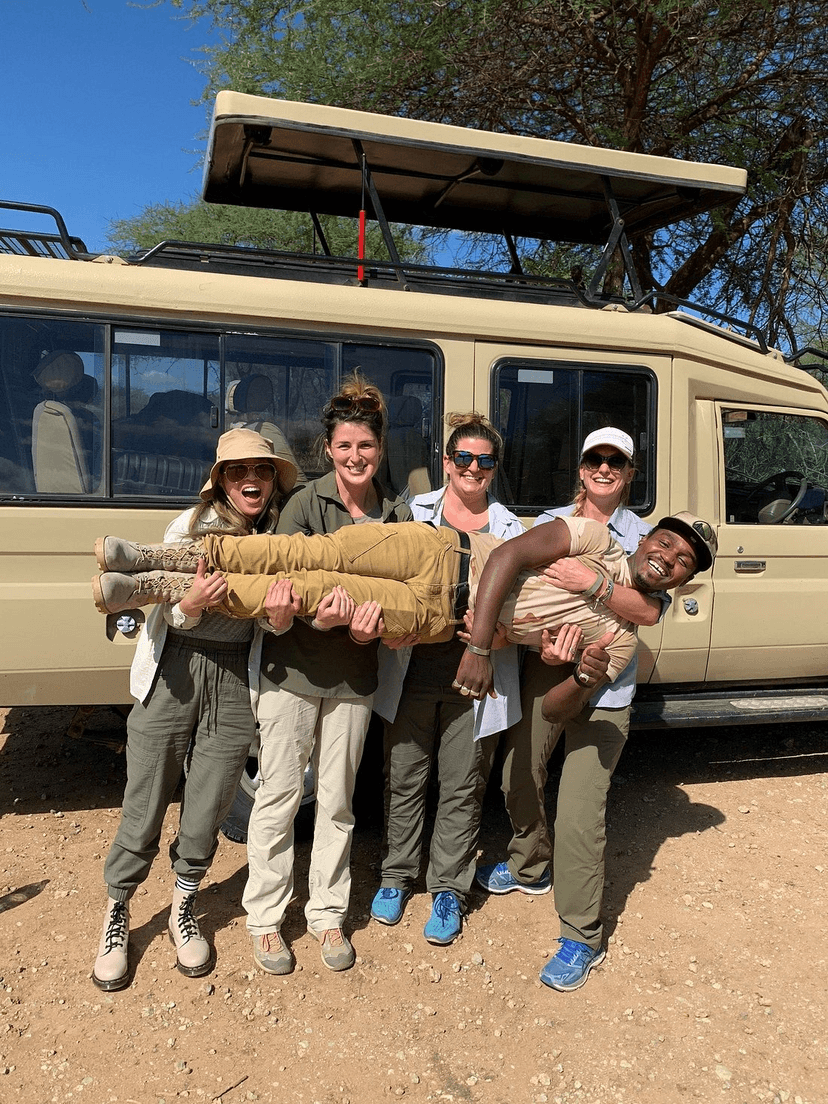
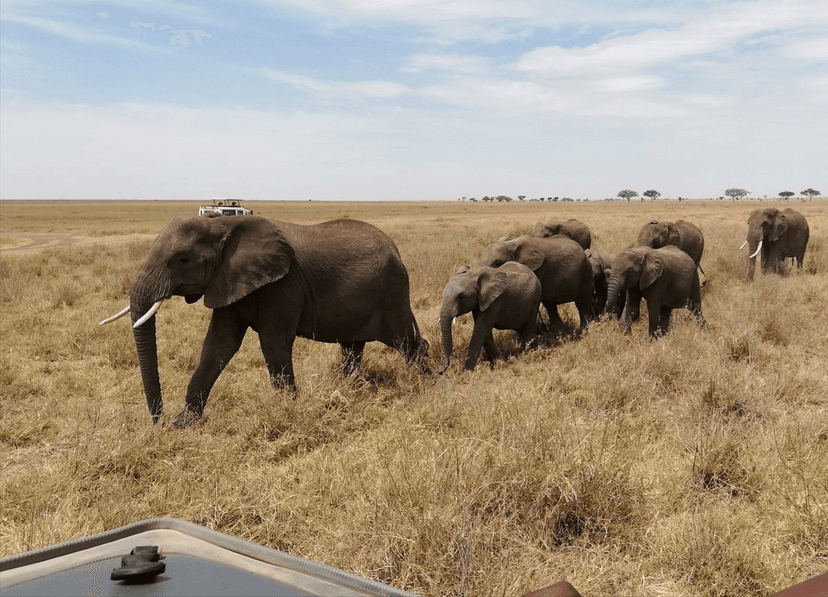
“Victor spots animals as if it’s the easiest thing in the world! Thanks to his experience and sharp eye, we saw an incredible variety of wildlife and even managed to see the complete Big Five.”
The seven day route divides the early northern stages and gives a steadier schedule before Kibo Hut.
Is Rongai less crowded?
It generally has fewer climbers than Machame and Marangu because it begins on the northern side.
Does Rongai use huts or tents?
Rongai uses tents until the descent, when the route reaches Horombo Hut.
Can I join a group?
Yes. Choose one of the guaranteed joining dates published on this page.
Is hotel accommodation included?
Yes. The package includes one Moshi hotel night before the climb and one after the climb.
Can private groups choose their own date?
Yes. Private departures are available on your preferred date, subject to guide and park arrangements.
How are your Kilimanjaro guides prepared for safety?
Our climbs are led by licensed and well trained Kilimanjaro guides. They are trained to recognize altitude related warning signs, complete regular health checks, manage the walking pace and respond when a climber needs to stop or descend.
How do you monitor climbers on the mountain?
Guides check how you feel and use a pulse oximeter to monitor pulse and blood oxygen readings. They consider the readings together with your symptoms and how your condition changes over time.
When is emergency oxygen used?
Emergency oxygen is carried for stabilization during descent or evacuation when health checks and established safety procedures show that it is needed. It is not used to help a climber continue towards the summit.
What happens if health checks show that continuing could be unsafe?
Your guide will explain the concern, provide support and follow established mountain safety procedures. When required, the team coordinates with the national park rescue service.
What travel insurance is required?
Your policy should cover trekking up to 6,000 metres, medical treatment, evacuation and repatriation. Helicopter support depends on weather, landing conditions and the terms of your insurance.


 7 mountain days with a licensed local guide team

 Day 1 | Accommodation

 Private airport transfers on arrival and departure
 Private climb dates
 International flights and Tanzania visa
 4.9 · 157 reviews on Tripadvisor




 WhatsApp Victor

